
Grieving a complicated love - Ruth and Brent’s story
There are some love stories that are difficult to explain from the outside.
Not because the love wasn't real, but because real life became tangled around it.
When someone we love is struggling with addiction, people can sometimes begin to see the relationship through the lens of that struggle. The addiction then becomes the story. The pain becomes the focal point. The things that went wrong become the narrative.
But before there was addiction, there was love.
And before there was loss, there was someone who was deeply cherished.
In this blog, I want to focus on a story of complicated love and complicated grief: the story of two people, Ruth and Brent - whose relationship was shaped by both deep affection and difficult circumstances. Sometimes, when grief is viewed only through the lens of addiction, the love that came first can be forgotten.
This is a story about remembering that love.
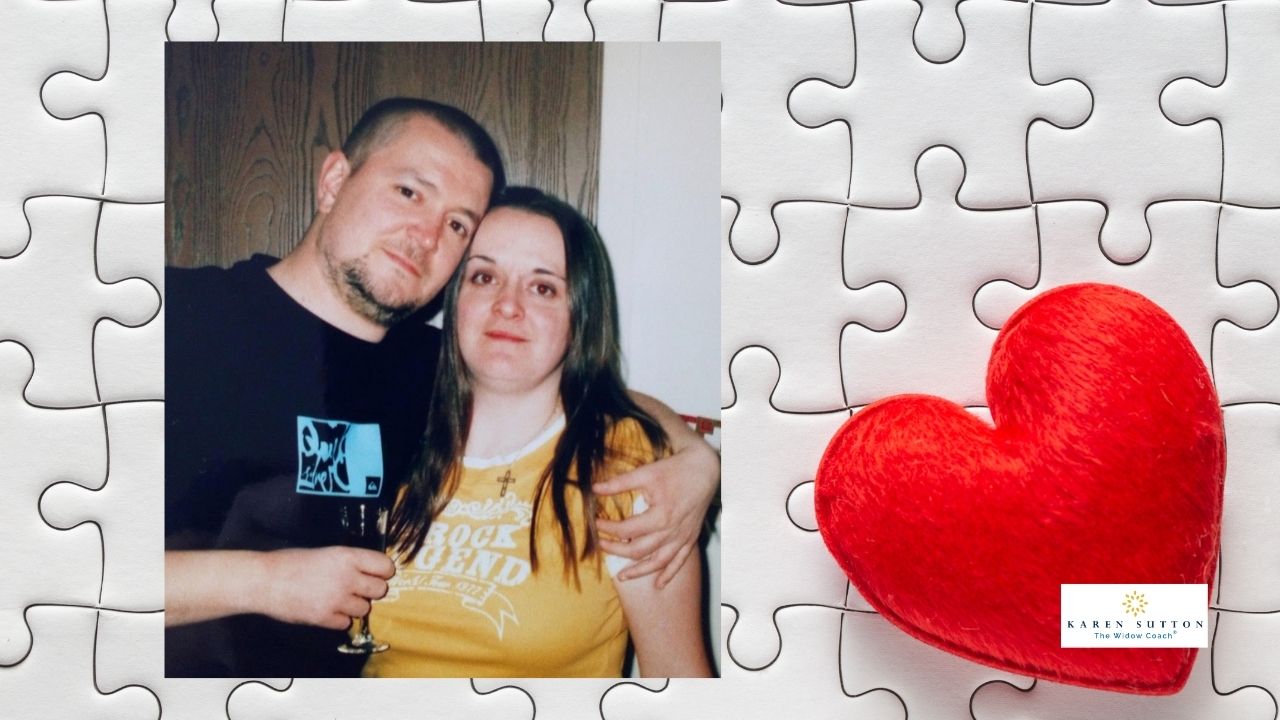
Brent, Ruth and the love between them
I wanted to begin with Brent - not with how things became difficult for him, not his struggles and not the hard parts, just him. I therefore asked Ruth, who he was, what she loved about him and what their love meant at its heart.
I met Brent in the summer of 1992. It sounds cliché but as soon as I met him, I knew he was going to be a huge part of my life.
His smile, depth and kindness were beautiful traits and there was always a melancholy feel about his soul. His sense of humour was incredible. You never forgot him.
I was always happy being with him. We mirrored each other and were very similar souls. Our love for music, the universe, deep chats and so much laughter. I loved him to bits. He was my person. I had found him.
Loving someone who is struggling
I think this is perhaps where stories like Ruth's become difficult for those looking in from the outside.
Because it is possible to love someone deeply and, at the same time, to be profoundly hurt by what is happening in their life.
It is possible to see the person you love beneath the behaviour, while also being exhausted by the consequences of that behaviour.
And It is possible to hope, to fear, to become angry, to forgive, to feel helpless - sometimes all within the same day. There is no simple, emotional language for that kind of love.
So I asked Ruth something that takes real courage to answer honestly - what it was like to love someone whose way of coping was causing so much harm.
Not just the practical weight of this, but the emotional experience - the watching, the hoping and the heartbreak of caring deeply for someone you couldn’t fix. How did she hold all of that and still hold him? And, alongside that - how did she look after herself? Was she able to? Was she capable of making space for her own pain amongst everything she was carrying for him?
Brent was diagnosed with OCD in 2000 and he struggled a lot. We were both very young, however we coped incredibly well with the challenges life brought to us.
I always knew our relationship was more challenging with the OCD on top - it was just more to consider generally on top of everything else that life throws at you.
We always enjoyed going out and partying the night away. We liked the excitement and life was never dull. However somewhere along the line, for Brent, he started to rely on alcohol a lot more.
And soon, the emotional weight of worrying about this, started to take its toll on me. Eventually it became a huge problem. Covid hit and life spiralled even more. The isolation was really difficult.
I romanticised our life so much at this point. The present was too upsetting to cope with. I was scared, lost, anxious, self-doubting and my self-esteem had hit rock bottom. My entire personality had changed.
It happens so slowly you don’t actually realise how dysfunctional your life has become. The 'chaos' becomes normal. You forget what peace is. I found I became quite detached from life in general; all my energy was taken up trying to micromanage his drinking. I was diluting his vodka and even hiding it. I was trying everything to help him cut it down and was getting nowhere.
The grief that comes before loss
There is another kind of grief that can be almost impossible to explain to people who haven't lived it.
Sometimes we begin grieving before someone dies.
We grieve for the future we imagined. The relationship we hoped might emerge. The person we remembered, or the person we believed might return. We essentially grieve for the possibilities.
And that grief can be complicated by guilt, because how do you mourn something that hasn't actually been lost?
Yet many women living alongside addiction know exactly what that feels like.
And so I wanted to ask Ruth whether she had experienced this kind of grief - the grief that began long before death, the grief of longing for a relationship she never had, or the version of Brent she wished she’d seen. And how, if at all, she made sense of that now?
I grieved our old relationship; I missed the strong man, my safe space. We used to argue a lot - that wasn’t anything new, but it got more volatile with vodka in the mix. We still had a sexual relationship - it was a huge part for us, but gradually the sex changed to a different kind of intimacy - that of caring. And this started taking over. I missed that bond so much. I think I enjoyed the moments where I felt he loved me and our connection was there. Everything about our life was contradictory.
We both carried shame about his addiction. I didn’t want anybody to judge him. I put my mask on daily to get through the day. And, it was exhausting; the constant walking on eggshells, wondering what mood he was going to be in when I got home from work and what version of Brent I'd have. That was scary and isolating.
When the loss arrives
And then there comes the loss itself.
The moment when everything that had been hoped for, feared, endured and carried - suddenly happened.
And the grief doesn't arrive neatly.
There isn't always a clean line between love and anger, relief and devastation, exhaustion and longing. Sometimes the person we are grieving is also the person whose struggles have caused us enormous pain.
And that can leave a widow carrying a grief that feels difficult to explain not only to others but to herself.
I wanted to ask Ruth, if she would be willing to share a little of what it was like when Brent died, and whether the complexity of her relationship made it harder to grieve in the way the world seemed to expect her to? I was also keen to understand whether she felt her grief was ever belittled or minimised by anyone because of Brent’s struggles and their challenges together?
When Brent died, my world crumbled. All the pain and the suffering felt as if it had been all for nothing. I felt like it was a completely avoidable death. I was angry at Brent for doing this to himself, then felt guilty for being angry at him because it was an addiction.
I did feel that my grief was minimised because of his addiction. One comment which a family member made really stuck in my head: “Well, at least you know what you're coming home to now”. I remember saying “Yes - nothing. My life’s gone and I have nothing.”
I believe that if he'd have died from something else, I’d have had more sympathy, but who knows? I’m presuming that. That was the story I told myself.
And underneath all of that, there is a question I think we sometimes forget to ask:
What happened to us?
When we have spent so long watching someone else struggle, loving them, protecting them, hoping for them and worrying about them, our own needs can become almost invisible.
So I asked Ruth something perhaps even more difficult than what happened to him.
I asked her what happened to her.
Guilt was a huge emotion for me. I turned my pain in on myself. I drank. I took strong painkillers and cannabis. And, I self harmed - anything to escape my thoughts, almost a reward for getting through the day. I felt I needed to punish myself. Brent wasn’t here now and I had suicidal ideation. What was the point in carrying on? We didn’t have kids. I had no push to want to continue. I felt my life was nothing and I was worthless.
Finding a place in the widow community
There is something else that can happen after a complicated loss. We don't only have to find our way through grief. Sometimes we have to find our way into the community of grief.
And that isn't always easy.
When the widow beside you is grieving a relationship that, from the outside, appears very different from yours, it can be tempting to compare.
Was my marriage or relationship real enough?
Is my grief supposed to look like theirs?
Am I allowed to miss him this much when our life together was so complicated?
Do I belong here?
These are questions that can remain painfully private.
So I asked Ruth what it was like to enter widow spaces carrying a story that didn't fit neatly into the version of grief she saw around her, women who perhaps seemed to be grieving more straightforward losses. I wanted to understand whether she felt her grief counted in the same way, and whether she felt she truly belonged. And I also wanted to know what made it possible for her to find the courage to share her truth? What did it feel like to have it received well?
Your podcasts were a lifeline to me; they got me through some really difficult nights. When I reached out to you - my soul knew I was making the right decision. I knew something had to change or I would continue on this path of self-destruction. Your podcast episode, ‘You get to choose' deeply resonated with me. It was a reality check. And I needed that.
My relationship was different from a picture-perfect marriage. When I joined your group, I was unsure of how I'd fit in. However, I trusted you and I vowed I'd always speak my truth. Never again would I hide away and not be myself. I loved Brent, but he had an illness and had died. My grief was just as valid and there was something beautiful in the knowing I'd be ok with a tribe of supportive women. It was and still is incredible. I know I can share anything and never feel judged.
Sometimes healing begins when we no longer have to edit our story in order to belong.
There is something profoundly healing about being able to say, this was my marriage; this was my love; this was my pain; this was my loss and to have someone respond, not with judgement, but with recognition.
Your grief does not have to be a carbon copy of someone else's grief to be real.
What Ruth wishes people understood
Ruth’s story raises a question that reaches far beyond her own experience.
What happens when the person you loved was also a person who caused you pain?
What happens when the relationship was complicated, but the love wasn't?
What happens when other people don't understand why you stayed and perhaps don't understand why you still grieve?
I wanted Ruth to answer that herself and to consider what she might say to a widow reading this who recognises her own story in Ruth’s, and who has been quietly wondering whether there's room for her.
I would always say to someone who loves or loved someone with addiction or mental health issues is - please don’t judge. Don’t dismiss their distress - even if it seems trivial to you. Nobody knows what anyone is going through in life. We all wear masks to the outside world, sometimes that’s the only way we can get through. People can often look fine on the outside, but behind the biggest of smiles, there can be so much pain.
Mental health is complicated. It’s rarely black and white. Some souls are extremely sensitive and desperate to switch off the noise and the thoughts in their heads. Sometimes, 'bad' habits help for a while - they distract. However, using them to cope and not having any other self help tools can be dangerous. Just be mindful of your words - it can be really difficult when emotions are high. Take a step out of the room, go for a walk and try not to respond straight away from a place of anger. It just adds fuel to the fire. I know that better than anybody. I did the best at the time with the knowledge I had. I do have regrets and I'll always carry them with me. Regret is kinder to carry than guilt. You can acknowledge the heavy parts of your journey, but not layer them with more suffering,
Getting used to living without chaos and with calmness is quite disorientating for me - I’m not used to it. I know my journey is far from over and the grief work is far from finished. This is a process and it will take as long as it takes. We all have different starting lines and that’s ok.
I’m now in my eighteenth month of not drinking. It just shows how the right support and beautiful souls holding you up can make a huge difference. My confidence and self-worth are improving and Karen - I’ll always be grateful you entered my life. It was meant to be
Brent's memory, and who Ruth is now
We began with Ruth as a person. And perhaps it feels right to return there.
Because grief does not ask us to erase the complicated parts of a relationship. Nor does healing require us to pretend that the painful parts didn't happen.
It’s ok to remember someone honestly and as a whole person. It’s ok for us to hold love and anger, tenderness and hurt, longing and acceptance simultaneously.
And, eventually, we can begin to ask another question: who am I becoming now? What has grief, in all its complexity, taught us about ourselves?
And, so I asked Ruth about Brent's memory today? I asked whether there was a version of him, a moment, a quality, something he gave you, that she finds herself returning to and wanting to keep close?
I like to think of positive, beautiful memories more so now. I choose the good story - the happy Brent, the fun Brent, all our naughty times together. We were good for each other and I feel deeply connected to him. Death has not taken his spirit. He's always here and I have a beautiful connection with him now.
I’m forever grateful I spent 30 years with my soulmate. I thank the universe for that.
He taught me so much. I wish he could see the version of me now; I’m sure he'd think I'm on the right path.
Here’s to the next chapter of my life. I don’t look too far ahead. I always thought I had an idea of how my life was going to be, but in reality, nobody knows that.
Conclusion
There is no single way to grieve a complicated love. There is no version of widowhood that we have to conform to, or perform correctly in order to deserve compassion. Some losses are complicated. Some relationships are complicated. Some grief is complicated.
None of that makes the love less real. And none of it makes the grief less worthy of being held.
Perhaps that is one of the greatest gifts we can offer one another as widows: the freedom to tell the truth about who we loved, what we lived through, what we lost - and to know that there is still a place for us here.
Ruth joined my Finding Hope in Widowhood programme, which runs every October. Please find out more here or join the waitlist for the next cohort - Finding Hope In Widowhood
